
Last Updated on July 8, 2026 by Sheryl Cooper
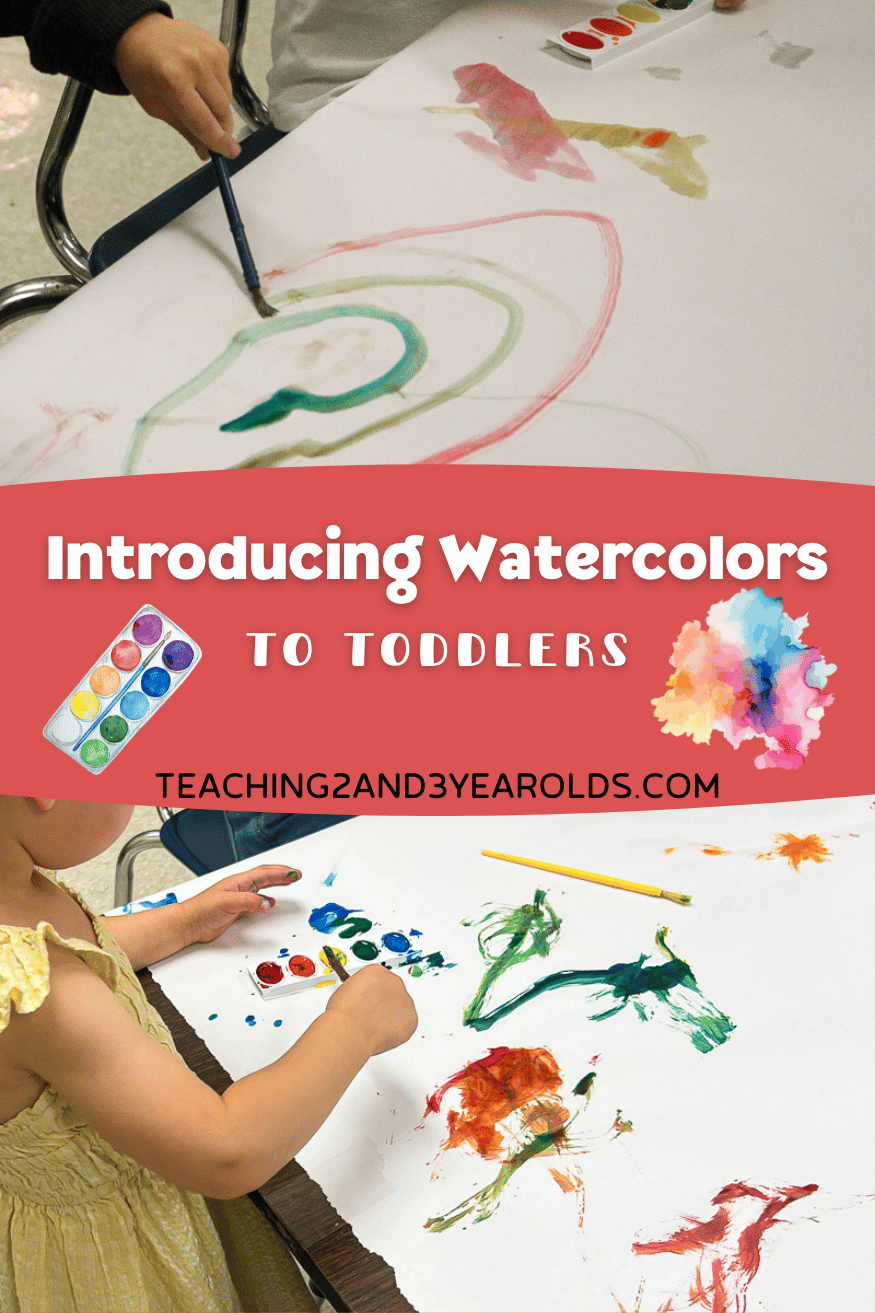
Inside: Introducing watercolor painting to toddlers can be very easy, especially when you apply these simple classroom tips!
If I had to choose a favorite painting activity for toddlers, year after year, hands-down it would be painting with watercolors.
I have yet to find a class who doesn’t love them!
But I’ve learned over the years that there are some things you can do with toddlers to make this a bit simpler, especially at the beginning of the school year.
So if you are wanting to try watercolors with little ones, check out these easy tips!
Introducing Watercolor Painting to Toddlers
What kind of watercolors?
When I am introducing watercolors to toddlers, I start with watercolor palettes. Toddlers love taking their brushes and dabbing them into each cell of paint, then brushing it on to the paper.
While I love Prang’s sheen when it dries, I’ve found their paint tends to stain. Therefore we went back to using good ol’ Crayola. To be exact, it’s Crayola Washable Watercolors. We include these in our school supply list that goes home to families at the start of the school year.
Paintbrushes
I find that the paintbrushes that come with the watercolor palettes are too thin for toddlers, at least at first. They love to see a substantial amount of paint go on the paper. Therefore, I swap the little brushes with larger paintbrushes.
Eventually I will give them a choice of different sizes, including the smaller brushes. But at the start of the school year I go with the larger ones.
Moistening the Paint
I’ve seen all the different ways teachers introduce water with watercolors, but in my experience providing cups of water can be a challenge while toddlers are learning how to paint.
Unless there is a teacher who can be right there the entire time, those little cups of water will be emptied within seconds, poured all over the table.
Therefore, I take a cup of water and one of our pipettes and I squirt some water on top of each cell of watercolors.
Watch: The Easiest Ways to Manage the Art Center
Mixing Colors
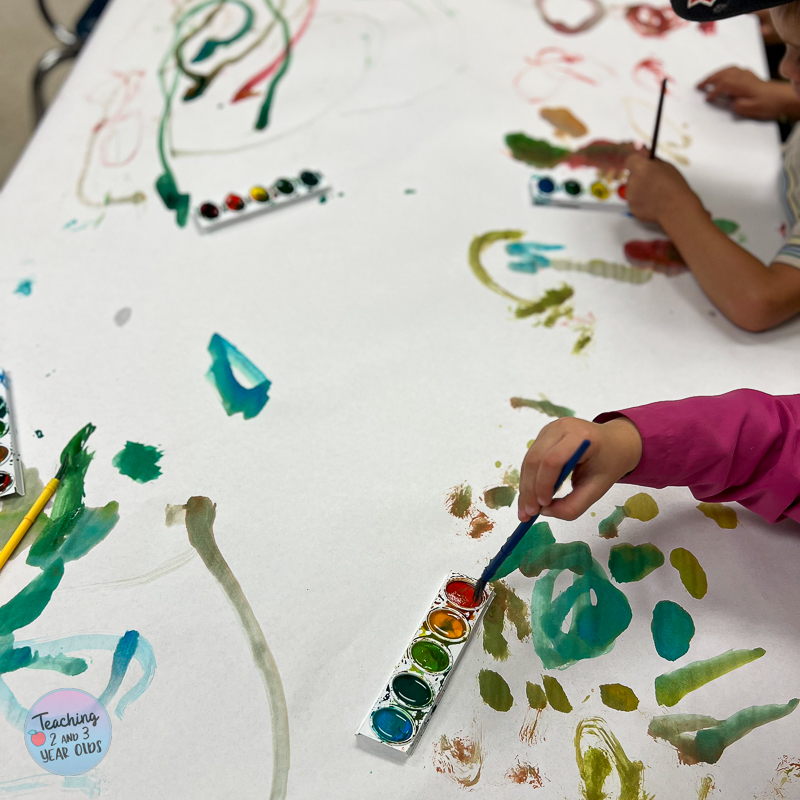
I know this part drives so many teachers crazy, but I’ve learned to just go with it.
For toddlers, it’s all about the experience of moving that paintbrush around. They will go from color to color, mixing them all up. Eventually they will want to be more deliberate with their color choices, but at this young age they just love the process.
If you are working on something that you want to be certain colors, you can cut up your strip of paint cells and only provide the colors of choice. I reuse these again and again. Once they are dry I put them in a container to use again later. They really do last quite a long time!
Some teachers place masking tape over the darker colors so that the product doesn’t end up muddy, but I’ve found that curious fingers pull the tape away.
You can also provide a small square of sponge for each child that they can swipe their brushes on in between colors, but two year olds tend to skip that part (or use the sponge with the paint!).
Paper
You can use regular copy paper, construction paper, heavyweight paper, and watercolor paper. My obvious choice is watercolor paper, but that can be a bit spendy so I don’t use it with every painting activity. I have found that heavyweight paper works very well, so that’s what I use the most.
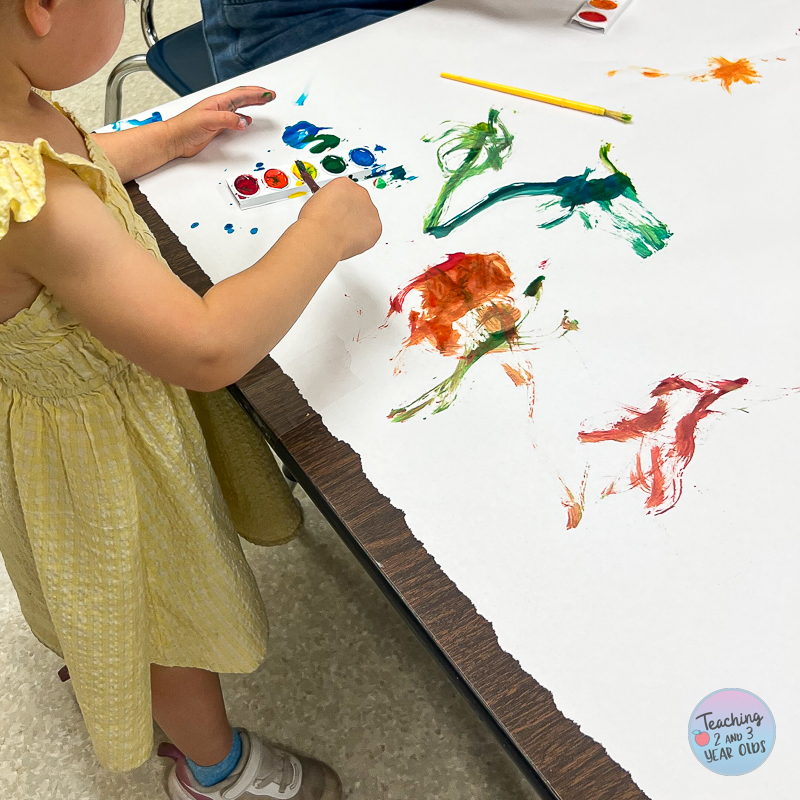
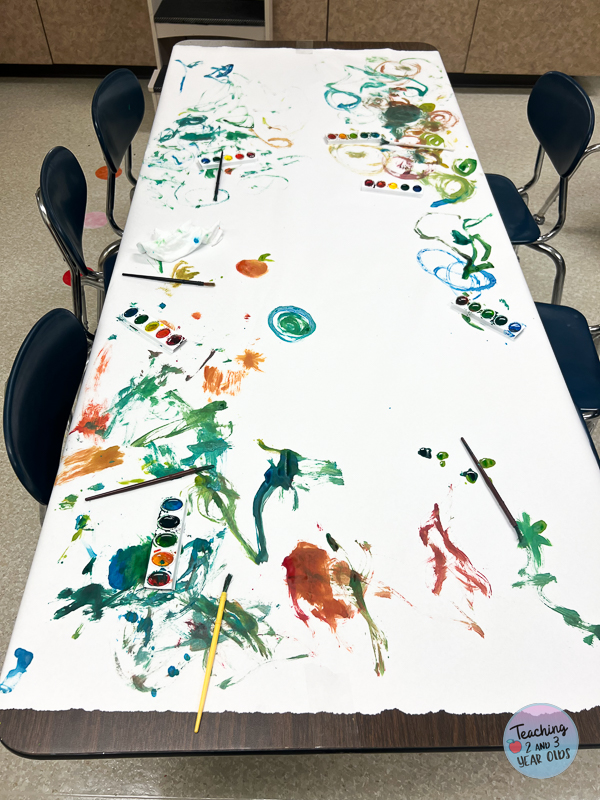
I also like to cover the entire table (taping down the sides of the paper to the table) using paper from a roll. Just place the moistened watercolor pallets on the paper, add brushes, and let the painting begin! I always do this during the first weeks of school, sometimes pulling away the chairs so the children can just walk right up and paint.
Introducing Watercolor Painting to Toddlers: The Activity
Setting Up
Get everything ready before you invite your toddlers to the art table.
Our art center is opened during our free-choice centers time, which is immediately after the children arrive to school.
I usually wait to open this center until everyone arrives, since I do like to have a teacher nearby to assist when needed. (Especially at the start of the school year.)
Group Painting
For group painting, cover the entire table with paper, securing the edges with masking tape.
Provide multiple watercolor palettes pre-moistened with water, as well as paintbrushes.
You can either leave the chairs at the table or remove them. If you have children who are a bit hesitant to sit and paint, removing the chairs might be the better option while they are adjusting to the art table.
Individual Painting
Provide multiple trays at your art table. On each tray have a pre-moistened watercolor palette (or sections of the palette), paint brush, and paper.
Get Painting!
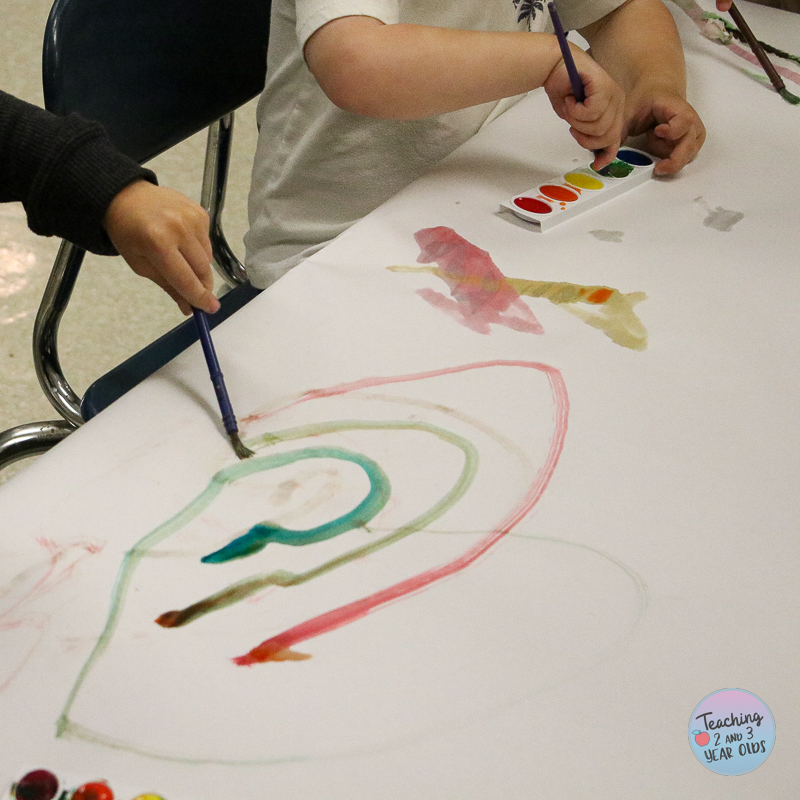
If this is the children’s first time using watercolors – or any paint, for that matter – show them how to dip their paintbrush into the moistened paint and then brush it on to the paper.
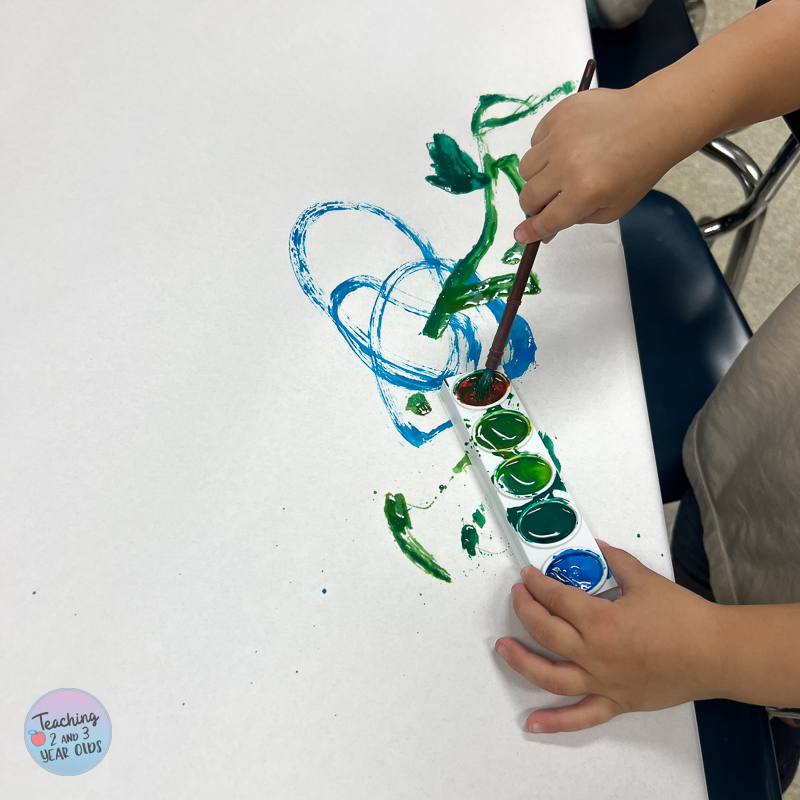
Do not be surprised if some of the children just want to keep moving their brushes through the paint. That alone is a wonderful experience, especially once they start mixing colors.
Eventually they will explore what happens when they then swipe the paper with their brush.
Such a fun way to create curves and lines!
Clean Up
When we are done with our watercolor palettes, I like to give them a quick rinse (because everything has been mixed around by the time they are finished) and spread them out on a towel or tray to dry thoroughly before putting away.
I do the same with the paintbrushes – rinse until the water is clear and then let air dry.
Display
I am often asked what I do with group projects. Obviously the children are not taking them home, since it’s one big piece of paper.
I make sure to take photos of the process so the parents can see it in our weekly photo show. Sometimes I hang it up on the wall for awhile.
Related: Decorating the Classroom with the Children’s Art
Moving on: Liquid Watercolors
Once the toddlers feel comfortable using watercolor palettes, I love introducing liquid watercolors.
Here are some activities we’ve done:


FREE CIRCLE TIME PLANNER!
Get your FREE circle time planner as a gift when you subscribe to my free weekly newsletters.
Here is my Privacy Policy
